
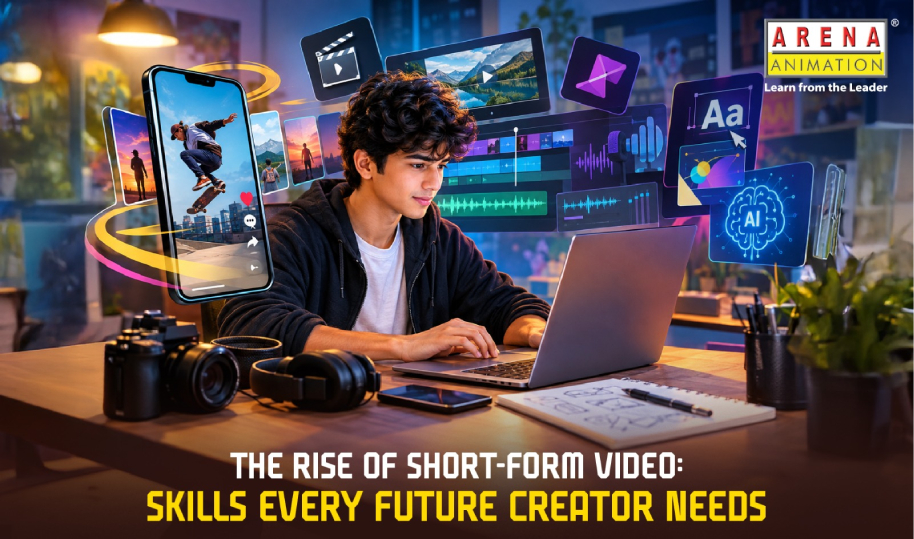
The Rise of Short-Form Video: Skills Every Future Creator Needs...
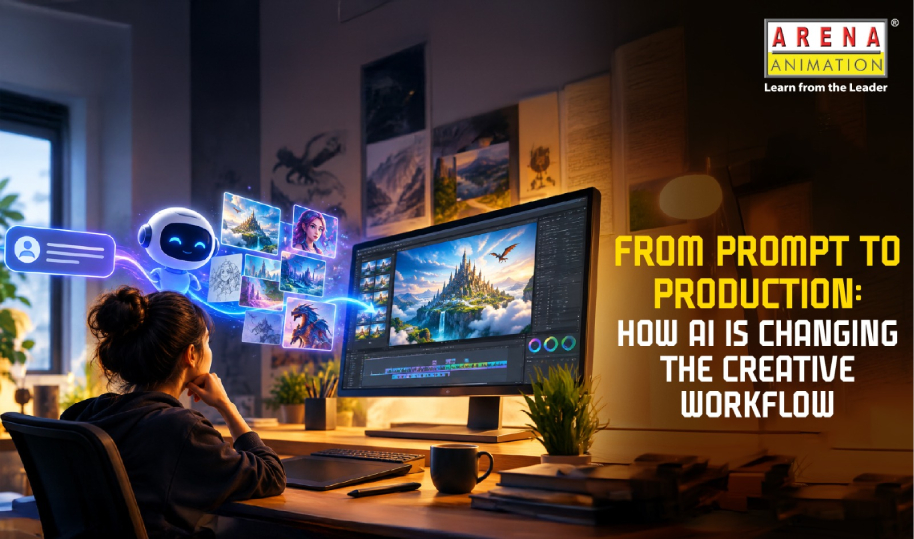
From Prompt to Production: How AI Is Changing the Creative Workflow...
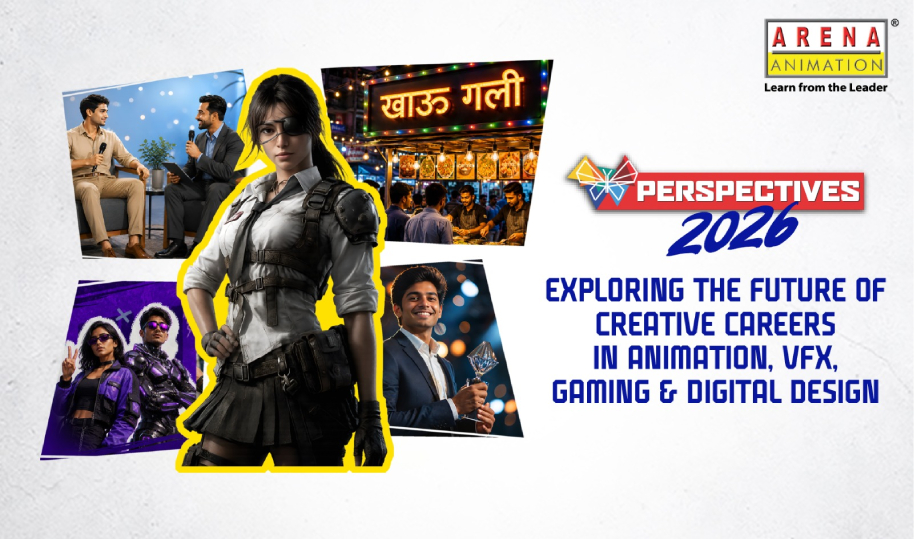
Perspectives 2026: Exploring the Future of Creative Careers in Animation, VFX, Gaming & Digital Desi...
The Edupreneur’s Advantage: How Opening An Arena Animation Franchise Delivers High-Yield Business Gr...

Real-Time Worlds: How An Unreal Engine Course Unlocks Careers In Gaming, Film Sets, And Virtual Real...
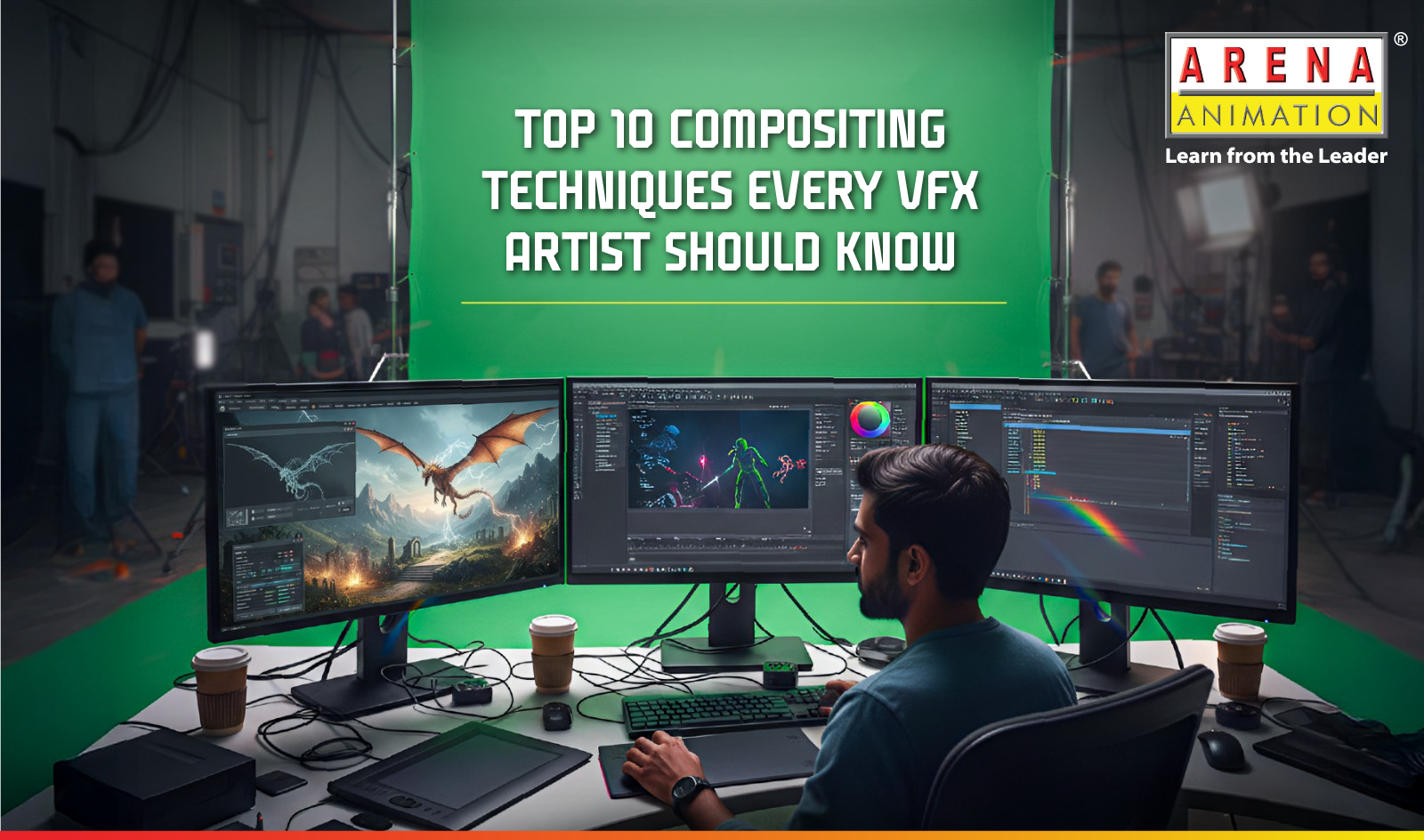
Top 10 Compositing Techniques Every VFX Artist Should Know
When people think about visual effects, they often picture explosions, creatures or massive fantasy worlds. What they rarely notice is the invisible craft that holds every shot together. Compositing is that craft. Whether you are exploring or planning to join an advanced VFX course, compositing is the skill that turns separate elements into believable visuals.
For students considering a VFX compositing and editing course or an advanced program in visual effects, understanding compositing techniques is essential. These skills define how professional your work looks and how confidently you can step into the world of VFX.
Why Compositing Matters in VFX Film Making
Compositing is the process of blending live action footage, CGI, matte paintings and effects into one seamless image. In professional VFX film making, the compositor often shapes the final look of a shot.
No matter how strong the animation or simulation is, poor compositing can break realism. This is why advanced programs in VFX film making give special importance to compositing workflows and visual continuity.
Every believable VFX shot is built on a series of technical and artistic compositing decisions. From preparing clean backgrounds and isolating characters to matching colours, integrating simulations and polishing final frames, each step plays a specific role in maintaining realism. These techniques are not optional add-ons but essential tools that help visual effects blend naturally into live-action footage.
Understanding these compositing techniques allows artists to solve real production challenges such as uneven lighting, complex motion, depth inconsistencies and camera movement. The following compositing techniques form the foundation of professional VFX workflows and explain how individual elements come together to create convincing cinematic imagery.
Clean Plate Techniques in VFX
A clean plate is the starting point of most composites. It is the background without actors or moving objects.
Clean plates are used to remove unwanted elements, fix background issues and support seamless integration of effects. A well prepared clean plate makes compositing smoother and saves time later in the pipeline.
Rotoscoping
Rotoscoping involves isolating subjects frame by frame with precision.
This technique is essential when dealing with complex edges like hair, motion blur or overlapping elements. Strong roto work ensures that effects sit correctly around live action elements without visual distractions.
Keying Techniques
Keying removes green or blue screens and replaces them with new environments.
Effective keying requires handling colour spill, edge refinement and uneven lighting. These skills are crucial when working with real footage that is rarely perfect.
Colour Matching
Colour matching helps all elements in a composite feel like they belong in the same space.
Balancing exposure, contrast and colour temperature across elements creates visual consistency. Subtle adjustments often make the biggest difference in realism.
Light Wrap Techniques
Light wrap adds realism by simulating how background light interacts with foreground elements.
This technique helps soften edges naturally so that composites feel integrated rather than layered.
Camera Tracking for Seamless Integration
Camera tracking recreates real camera movement in 3D space.
Accurate tracking allows CGI to move naturally with live footage, making it a critical technique for believable integration.
Depth and Atmosphere
Depth effects like fog and atmospheric haze add scale and realism.
When used carefully, depth cues enhance cinematic quality without overpowering the shot or making it look artificial.
Multi Pass Compositing
3D renders often come in multiple passes rather than a single image.
Multi pass compositing allows artists to control lighting, reflections, shadows and depth independently, giving greater flexibility in the final image.
Simulation Integration
Effects like smoke, fire and explosions need careful compositing.
Proper integration ensures simulations match the lighting, scale and motion of the shot, helping them feel grounded in the scene.
Final Shot Polish
Final polish brings everything together.
This stage involves refining edges, managing grain and maintaining continuity across shots. Final polish often separates student work from professional output.
Learning These Skills Through the Right Courses
Compositing skills grow through practice and guided learning.
Arena Animation offers structured programs that help students understand real production workflows. The Advanced Program in Visual Effects builds strong foundations in simulations and compositing using tools like Houdini and Nuke.
For students who want to specialise, the Advanced Program in VFX Compositing and Editing focuses on rotoscoping, keying, colour integration and final shot refinement. Tools like Silhouette and editing workflows are covered in depth.
Those interested in storytelling along with effects can explore the Advanced Program in VFX Filmmaking, which connects compositing with camera movement and visual continuity. Foundation options like VFX Prime introduce learners to animation, FX and basic compositing through hands-on projects.
These programs help students understand how individual techniques fit into a real studio pipeline.
Final Thoughts and Your Next Step
Compositing is where technical skill meets artistic judgment. It demands patience, consistency and a strong eye for detail.
If you are serious about VFX film making, investing time in learning these techniques through the right advanced VFX course can shape your career direction. Look for training that focuses on practical workflows and real shot building rather than shortcuts.
Now is the time to take that next step. Explore a professional VFX compositing and editing course, build strong fundamentals and start creating visuals that feel believable on screen.
FAQs
1. What is compositing in VFX?
Compositing is the process of combining live-action footage, CGI and visual effects into a single, realistic shot. It is one of the most important stages in VFX film making.
2. Do I need to learn compositing to work in VFX?
Yes. Compositing is a core VFX skill. Even if you specialise in animation or FX, basic compositing knowledge helps you understand how final shots are created.
3. Which software is used for VFX compositing?
Commonly used software for VFX compositing includes Nuke, After Effects and Silhouette. These tools are widely used in professional VFX pipelines.
STUDENT ENQUIRY
Join Arena Animation and turn your creative passion into a thriving career. Your story could be the next success we celebrate.

Did you find the information you were looking for?

At Arena Animation, we craft innovative digital solutions, empowering creativity and driving growth through cutting-edge animation and design expertise.