
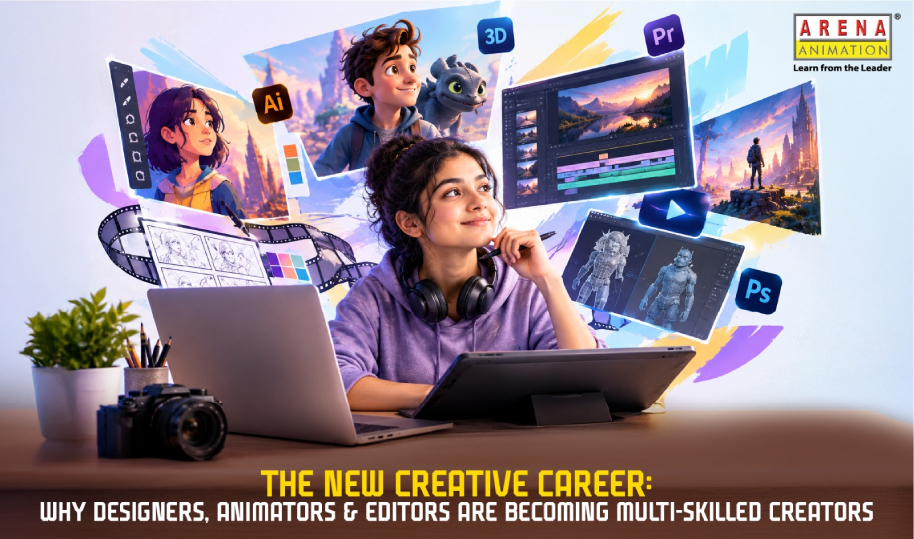
The New Creative Career: Why Designers, Animators & Editors Are Becoming Multi-Skilled Creators...
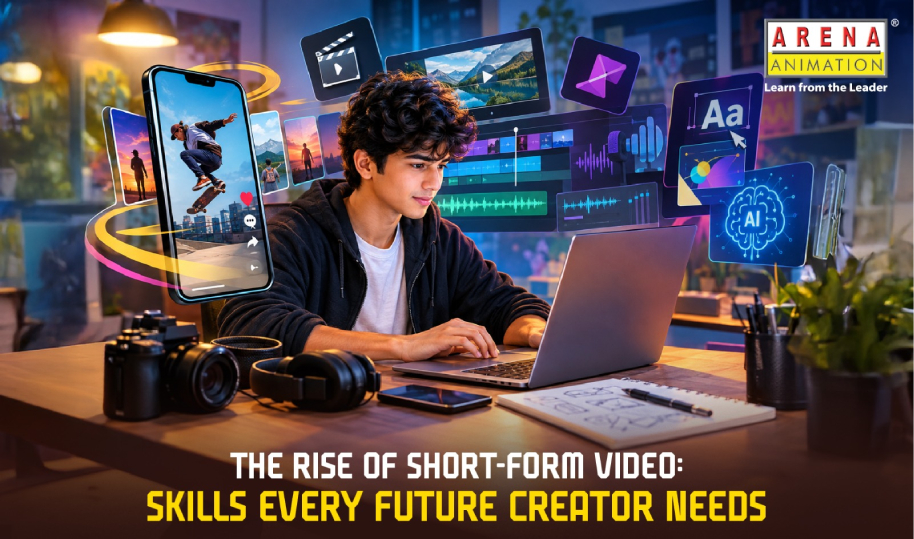
The Rise of Short-Form Video: Skills Every Future Creator Needs...
From Prompt to Production: How AI Is Changing the Creative Workflow...
Perspectives 2026: Exploring the Future of Creative Careers in Animation, VFX, Gaming & Digital Desi...
The Edupreneur’s Advantage: How Opening An Arena Animation Franchise Delivers High-Yield Business Gr...
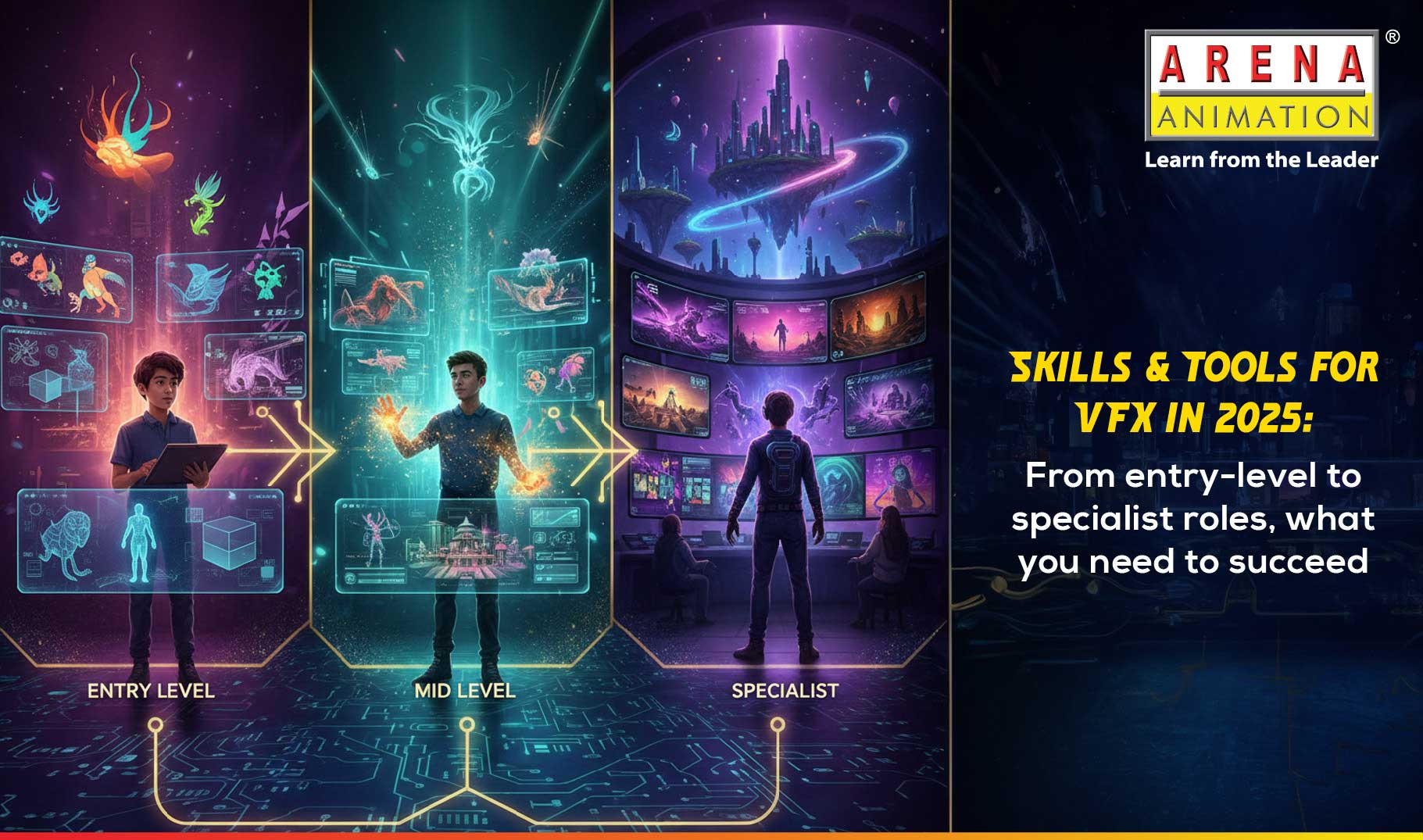
Skills & Tools for VFX in 2025: From entry-level to specialist roles, what you need to succeed.
What is a good VFX?
A magical VFX pulls you into a scene where you lose track of time and place. It is a skill to merge imagination with technology and produce an impressive reality.
The world of VFX is now bigger, faster and more jaw-dropping than ever. It is used almost everywhere today: movies, OTT, gaming, and ads too! But how do you become a magician behind the scenes? Let’s dive into what you need to have a successful VFX career.
The Beginning:
This is your foundation for building a VFX career. It requires a mix of art, technology, and storytelling. You need a balance of everything to truly shine.
- Creativity & Imagination: If you can dream it, you can do it. But you need to have a curious mind as well.
- Observation: Pay attention to light, shadow, and even the tiniest detail. They help to make your visuals believable.
- Willingness to Learn: One of the important factors is your willingness on how to learn VFX. Enrolling in a reputable institution that helps you with technical mastery is extremely important.
Know The Basics:
Having a little bit of technical knowledge, like knowing software used in the AVGC sector, can be helpful. These serve as your toolbox, providing the technology that fuels creativity. Here, we are listing some VFX tools dominating the creative space.
- Autodesk Maya & Blender: They are your go-to tools for 3D modelling, animation, and rigging. You don’t need to know how it works completely, but just having simple knowledge about it will come in handy.
- Adobe After Effects & Nuke: For compositing, motion graphics and adding cinematic polish to your work, these tools are your companions. Just strolling through these can help.
- Houdini: Ideal for simulations like adding smoke, water, fire, explosions, etc. This tool will add that perfect finish to your scene and give it a professional look.
- Unreal Engine 5: Production houses are turning to real-time VFX for crafting impactful visuals for their work.
Your VFX Career Path:
The best thing about VFX as a career is that it is dynamic; you can start small and grow your way up to big-screen projects.
Here’s a glimpse of how your journey can unfold:
- Entry Level: This is the beginners' level. Here you learn how to build blocks in the world of animation. You will do things like rotoing, painting, matchmoving and more.
- Mid Level: Here you begin to craft magic with compositing, 3D modelling, and lighting.
- Specialist: VFX supervisor, technical director or pipeline developer. At this level you take the creative charge and lead.
But the key to all of this is to stay curious, keep learning and try to build an impressive portfolio.
How to learn VFX the smart way:
You don’t have to do this alone. With well-structured VFX courses, expert mentors and industry-driven training, you can speed up your growth.
Wondering how to learn VFX effectively?
Here’s the secret:
- Join an institute that gives you hands-on experience.
- Work on real-world projects.
- Learn from the teachers who have worked with studios and on actual films.
- Stay updated on the latest tools and trends.
If you are passionate about VFX training, then Arena Animation can be your perfect training ground. It helps you master VFX tools, gives you creative training, studio exposure and industry-grade VFX skills that make your work stand out.
Take that leap, create visual stories that move the world and leave an impact. Explore our VFX courses today!
STUDENT ENQUIRY
Join Arena Animation and turn your creative passion into a thriving career. Your story could be the next success we celebrate.

Did you find the information you were looking for?

At Arena Animation, we craft innovative digital solutions, empowering creativity and driving growth through cutting-edge animation and design expertise.