
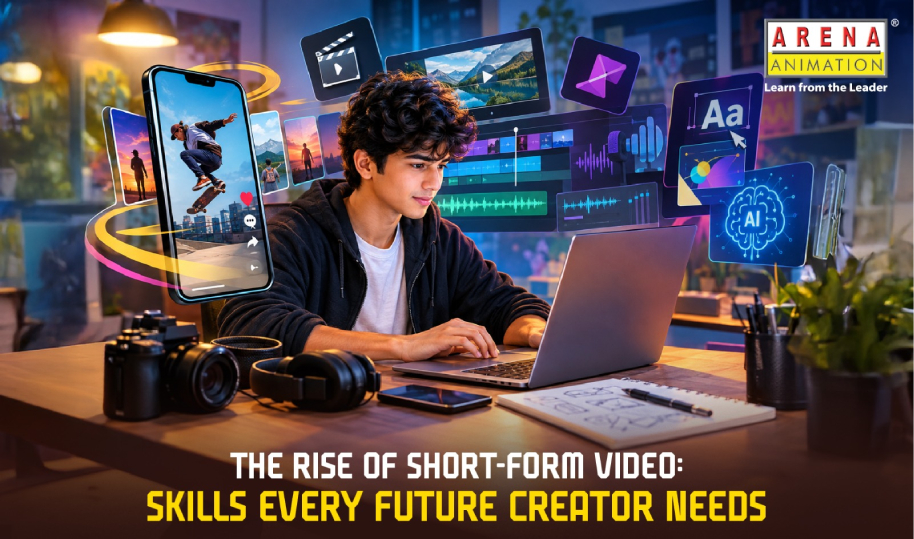
The Rise of Short-Form Video: Skills Every Future Creator Needs...
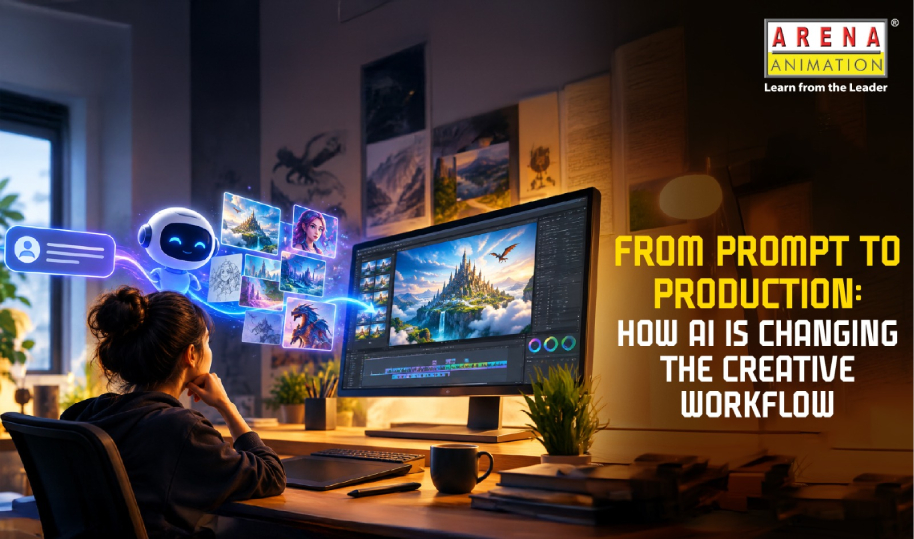
From Prompt to Production: How AI Is Changing the Creative Workflow...
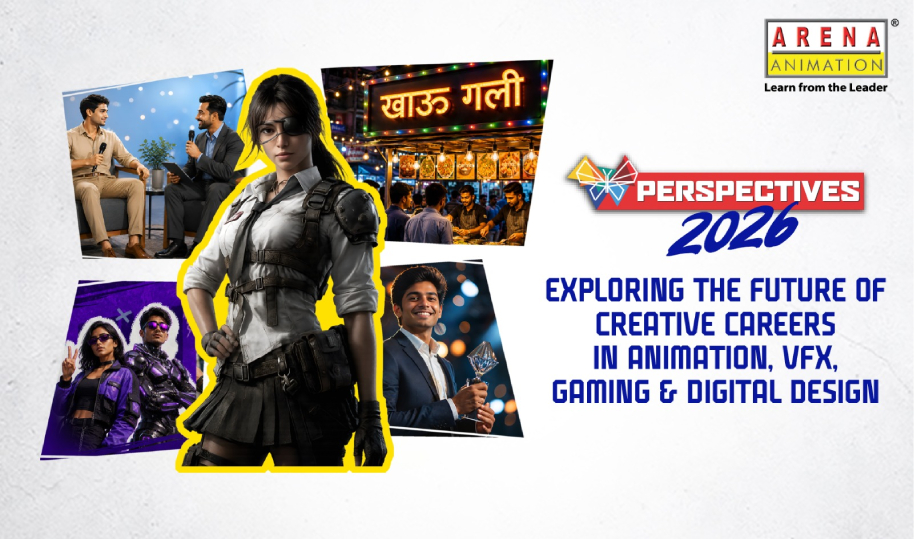
Perspectives 2026: Exploring the Future of Creative Careers in Animation, VFX, Gaming & Digital Desi...
The Edupreneur’s Advantage: How Opening An Arena Animation Franchise Delivers High-Yield Business Gr...
Real-Time Worlds: How An Unreal Engine Course Unlocks Careers In Gaming, Film Sets, And Virtual Real...
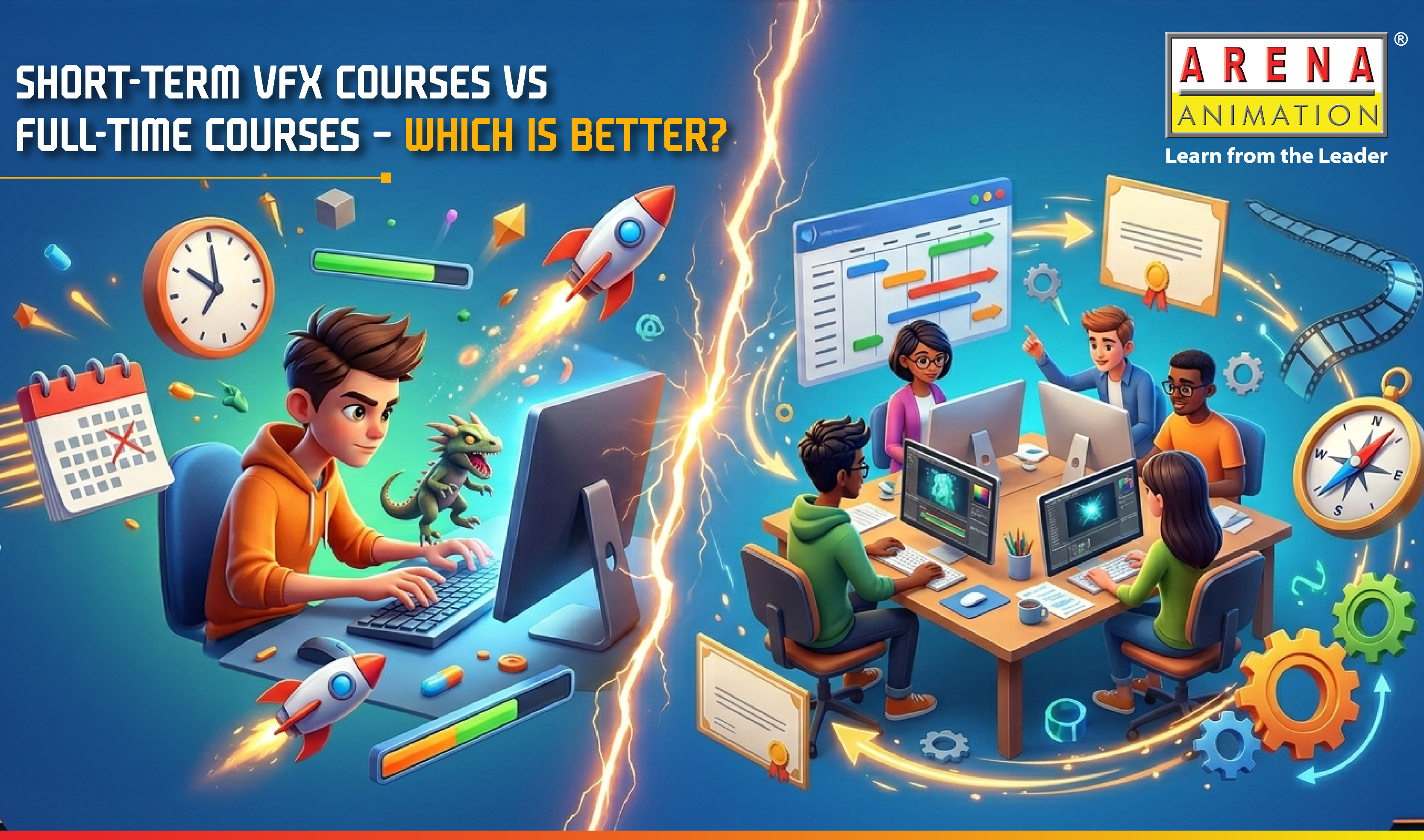
Short-Term VFX Courses vs Full-Time Courses – Which Is Better?
If you have ever paused a movie scene just to wonder how it was made or replayed a visual shot because it felt too real to be fake, chances are VFX has already caught your attention.
Today, visual effects are not limited to big cinema screens. They are part of web series, advertisements, music videos, games and even Instagram reels. Naturally, more students are now considering a VFX course as a serious career option.
And almost everyone reaches the same confusing crossroads.
Should I start with a short term VFX course or commit to a full-time VFX course?
There is no simple yes or no. The better choice depends on you. Your background, your patience level, your financial situation and how seriously you want to pursue this field. Let us break this down for you.
How VFX Careers Really Grow
One common misconception students have is that learning software equals learning VFX.
That is not true.
VFX is a craft built inside a production environment. Every shot exists to serve a story. Every artist works as part of a larger pipeline. The strongest VFX professionals understand why a shot exists, not just how to execute it.
A real VFX workflow usually includes:
● Planning visuals during pre-production
● Creating 3D assets and animations
● Lighting and rendering scenes realistically
● VFX compositing and editing
● Blending CGI with live-action footage
● Delivering final shots for films or digital platforms
Any good VFX course should help you understand this journey rather than teaching tools in isolation.
What Exactly Is a Short-Term VFX Course?
A short term VFX course usually runs for three to six months. These courses are designed for quick learning and quick exposure.
They are often focused on one skill set rather than the entire pipeline.
Most short-term courses focus on areas like:
● VFX compositing and editing
● Motion graphics fundamentals
● Basic 3D workflows
● Software-based training
They move fast and expect you to keep up.
Who Usually Benefits from a Short-Term VFX Course?
This path works well if:
● You are curious but not fully committed yet
● You are studying something else and exploring VFX on the side
● You already have some design or animation background
● You want practical skills without long-term pressure
For many students, this becomes a safe first step rather than a final destination.
Short-Term VFX Course Duration and Fees
One big reason students choose this option is accessibility.
● Duration is short and manageable
● Fees are lower compared to full-time programs
● You can balance it with college or work
It feels less risky and more flexible.
Limitations of a Short-Term VFX Course
Short-term courses are useful but not magical.
● Do not cover the full VFX pipeline
● Offer limited storytelling or film making exposure
● Produce smaller portfolios
● Provide less industry mentoring
You gain skills but you still need direction and self-learning afterward.
What Is a Full-Time VFX Course Like?
A full-time VFX course is a completely different experience. These programs usually last one to three years and require serious commitment. Here you are not just attending classes. You are training for a career.
What Full-Time Courses Focus On
A structured full-time VFX course teaches:
● Visual fundamentals and creative thinking
● Multiple software tools used in studios
● Pipeline-based workflows
● Shot planning and execution
● VFX film making and storytelling
● Portfolio and demo reel development
You grow step by step rather than rushing through tools.
Understanding Advanced VFX Courses
An advanced VFX course takes you deeper into specializations such as:
● Advanced compositing techniques
● Photorealistic lighting and rendering
● Matchmoving and camera tracking
● Real-world shot breakdowns
● Integrating CGI seamlessly into live footage
These are the skills studios expect when hiring artists for films and OTT content.
VFX and Animation Course Fees and Duration
This path requires more investment.
● Course duration ranges from one to three years
● VFX and animation course fees are higher
● Training includes industry-style projects and mentoring
It costs more but it also gives you time to mature creatively.
Short-Term vs Full-Time Courses A Realistic Comparison
Let us keep this simple.
● Short-term courses help you start.
Full-time courses help you stay and grow.
● Short-term learning is fast and skill-focused.
Full-time learning is deep and career-focused.
● Short-term courses are affordable and flexible.
Full-time courses demand time, money and discipline.
Neither option is wrong. They just serve different stages of a student’s journey.
How the VFX Industry Actually Hires People
Here is something every student should know early.
Studios do not hire based on course names.
They look at:
● Your portfolio
● Your understanding of shots
● Your ability to explain your work
● Your attention to detail
A student who completes a short term VFX course and continues learning seriously can succeed. A student who completes a full-time course but stops practicing may struggle.
The course opens the door. Your effort keeps it open.
So Which Option Should You Choose?
Choose a short term VFX course if:
● You are still exploring creative careers
● You want a low-risk entry point
● You already have some related skills
● You plan to grow gradually
Choose a full-time VFX course if:
● You are serious about working in films or OTT
● You want structured guidance and mentoring
● You want to understand VFX film making deeply
● You aim for long-term studio roles
Be honest with yourself. That matters more than trends.
A Smarter Path Many Artists Take
Many successful VFX artists do not choose just one path. They begin with a short term VFX course to understand the basics. Once confident, they move into a full-time or advanced VFX course to specialize and strengthen their portfolio. This approach saves money, reduces uncertainty and builds clarity.
Conclusion
VFX is not a shortcut career. It demands patience, practice and curiosity. Whether you choose a short-term course or a full-time program, remember this.
Software will change. Tools will evolve. What stays valuable is how you think as an artist. Watch films closely. Break down shots. Ask why a scene works. Practice consistently.
The best VFX course does not just teach you how to use tools. It teaches you how to see stories through visuals. That is where real creative careers begin.
STUDENT ENQUIRY
Join Arena Animation and turn your creative passion into a thriving career. Your story could be the next success we celebrate.

Did you find the information you were looking for?

At Arena Animation, we craft innovative digital solutions, empowering creativity and driving growth through cutting-edge animation and design expertise.