
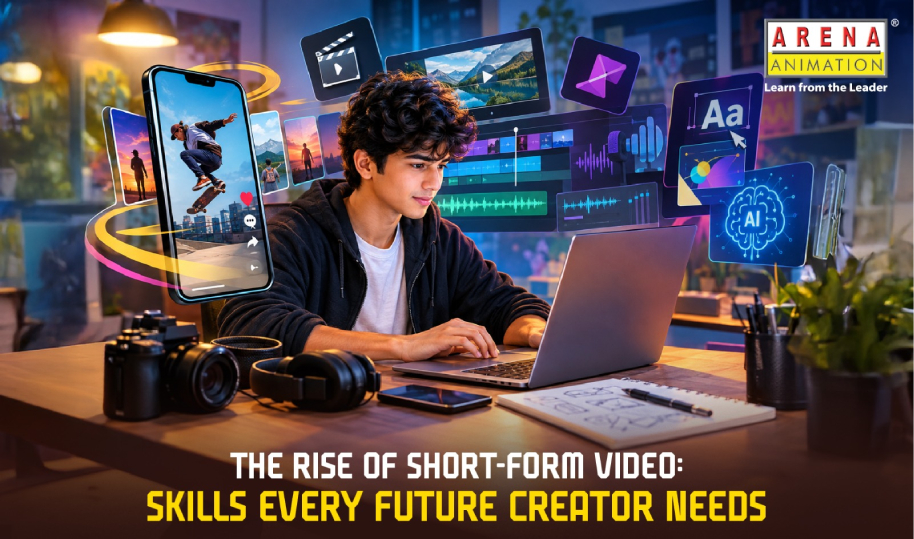
The Rise of Short-Form Video: Skills Every Future Creator Needs...
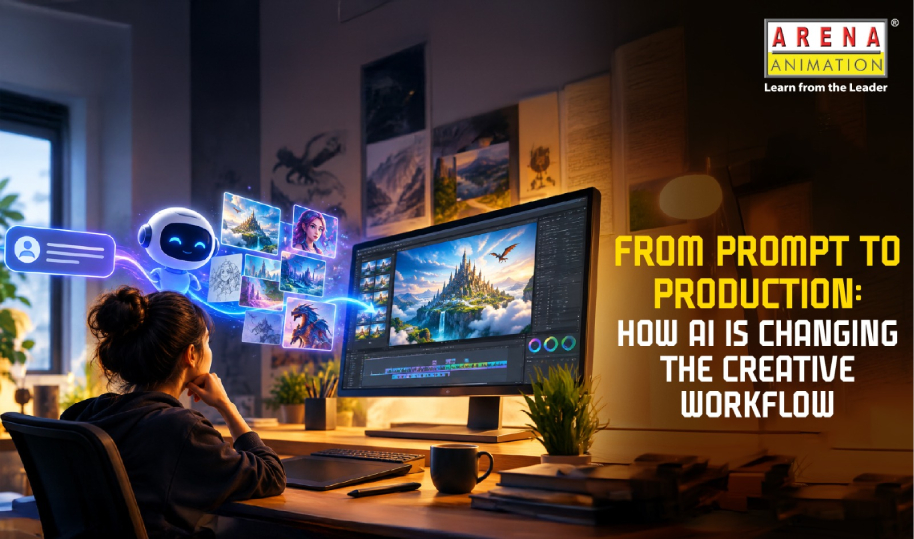
From Prompt to Production: How AI Is Changing the Creative Workflow...
Perspectives 2026: Exploring the Future of Creative Careers in Animation, VFX, Gaming & Digital Desi...
The Edupreneur’s Advantage: How Opening An Arena Animation Franchise Delivers High-Yield Business Gr...
Real-Time Worlds: How An Unreal Engine Course Unlocks Careers In Gaming, Film Sets, And Virtual Real...
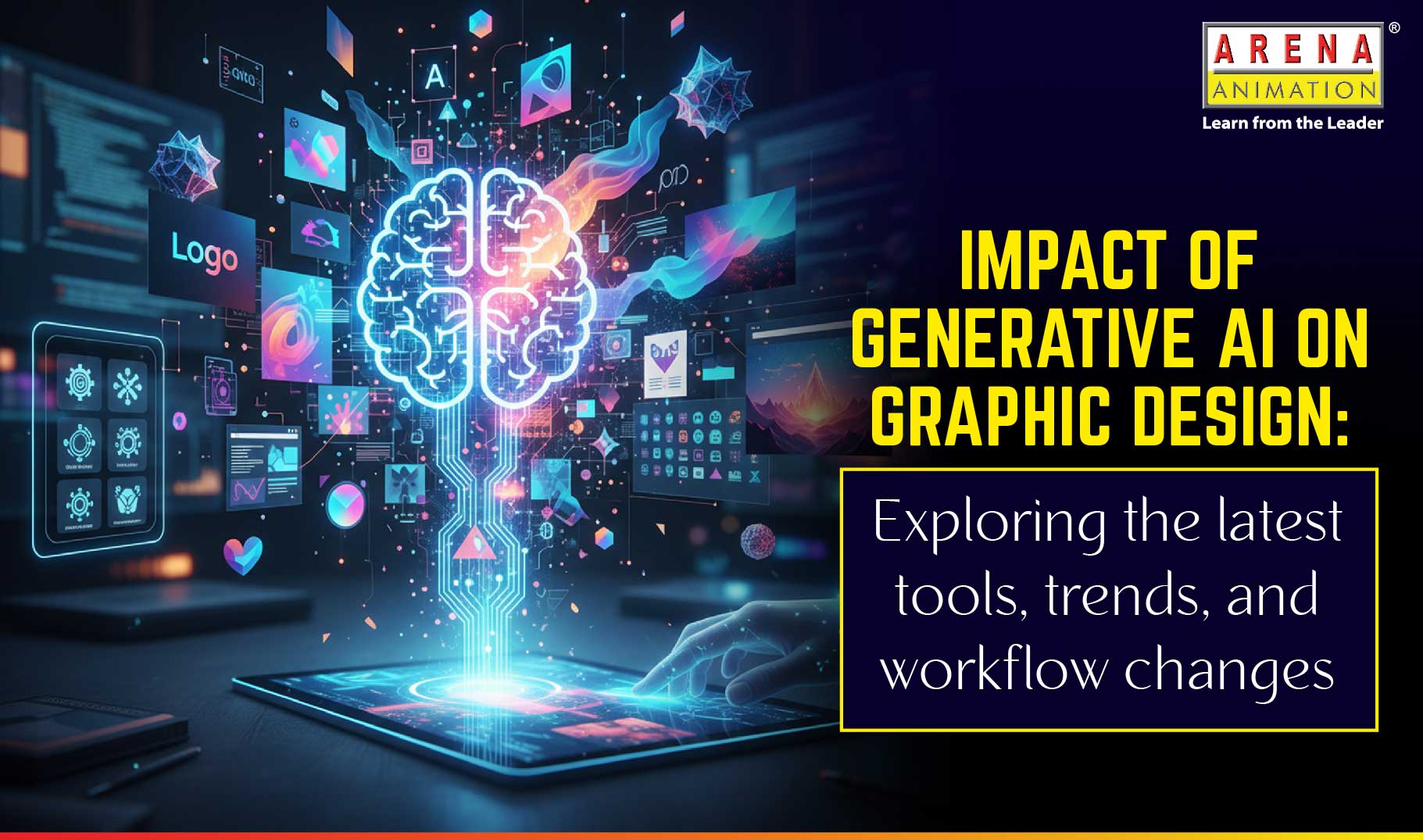
Impact of Generative AI on Graphic Design: Exploring the latest tools, trends, and workflow changes.
Capture, create and deliver. That's day-to-day work for a graphic designer. But this is going through a revolution with the invention of generative AI. A field that was once ruled by human creativity and manual craftsmanship is now taking a turn towards the path of human imagination and artificial intelligence. The rise of AI graphic design tools has redefined how designers create visual content.
The rise of generative AI in design:
AI can now generate all sorts of content, be it images, videos, designs or codes, just with prompts, patterns and datasets within seconds.
Traditionally, the main tools used in designing were Photoshop and Illustrator, but now platforms like Adobe Firefly, Midjourney and Canva Magic Studio are used to assist or automate parts of the creative process. Designers can give a detailed prompt of the picture they have in mind, and the AI instantly generates high-quality designs. This has given the professionals and the beginners the power to craft stunning visuals with less effort and time.
The New Wave Of AI Graphic Design Tools:
The explosion of AI tools is taking designers to a new level of creativity. Here are some that are widely used:
- Adobe Firefly – It allows creators to generate and edit images through text prompts, change backgrounds and create realistic effects in minutes.
- Canva Magic Studio – It helps designers to resize, edit and enhance visuals with AI suggestions, making the design look more professional.
- Midjourney and DALL.E 3 – Best for concept art and ideation, these tools help you explore new styles, moods and compositions in less time.
- Runway ML – Is used for motion design. It simplifies editing video and animation.
- Fotor and Looka – Technically used for AI logo design, these tools create brand identities based on keywords, colour palettes and style preferences.
These AI tools save time and explore creative possibilities. This opens the door for designers to experiment with hundreds of ideas starting from the beginning. It helps them work on strategies, different forms of storytelling and emotional resonance.
The Impact of AI on Creative Workflows:
The AI workflow in design is dynamic, iterative and collaborative, blending technology with human creativity.
Here’s how it is changing traditional workflows:
- Faster Ideation: The designers now have the freedom to instantly visualise through AI rather than spending hours on initial sketches. This helps in faster ideation and team alignment.
- Personalisation: Brands can generate personalised creatives and social media graphics made for different audiences using AI tools.
- Time-consuming tasks: Resizing images, removing backgrounds, colour correction and layout adjustments – all these tasks are time-consuming when done manually. With AI all this work is done within minutes and with perfection.
- Design suggestions: AI has the ability to analyse trends and user engagement data to suggest design elements that resonate with audiences and the brand.
In short, a designer’s role is shifting from execution to direction.
Trends in AI Graphic Designing:
The impact of AI goes beyond tools; it's influencing aesthetics, workflows and even how design is taught and learnt.
Below are the top AI trends:
- Prompts: Designers can now ‘talk’ to AI through prompts to get the desired results. Another skill that they can develop is mastering writing prompts, which can be learnt in an institute that teaches how to write effective prompts.
- Originality in Design: As AI becomes common, designers must learn to integrate AI-generated creatives into their content while maintaining their originality.
- Collaboration: AI is not here to replace designers but to collaborate with them. Human creativity still has a lot of weight due to its unmatched craft of storytelling and emotional aspect to it. The outcome does not rely on the AI but on the designers.
- Demand: The demand for designers who understand generative AI tools is growing. Hence, learning how to use this technology across platforms has become important. Knowing the inputs and the outcomes of the tools helps you in climbing the ladder of creativity.
- Real-Time Design: Brands can now produce campaigns in a short span of time. Visuals can be automatically optimised for engagement across multiple platforms, keeping the audience's taste in mind.
The Future of Generative AI:
In the future, AI will be integrated into design on a higher level. Designers will then have a robotic assistant that understands brand tone, audience behaviour and visual preferences.
As the industry is evolving, the demand for professionals skilled in AI continues to rise. From advertising agencies to startups, companies are seeking designers who can create smart and impactful visual content with the help of AI.
Artificial intelligence is an amazing tool, but it cannot replace humans in the employment sector. As a creative graphic designer, you have to train yourself to not entirely rely on it but use it skillfully. After all, we do need that human touch in our work.
At Arena Animation, we understand the evolving landscape of creative industries. Master both traditional design principles and the latest AI graphic design tools with our AI and Graphic Designing Courses.
Whether you want to become a digital artist, motion designer or brand strategist, we give you the creative and technical foundation to stand out.
Join Arena Animation today and lead the next generation of designers shaping the future with AI.
STUDENT ENQUIRY
Join Arena Animation and turn your creative passion into a thriving career. Your story could be the next success we celebrate.
Did you find the information you were looking for?

At Arena Animation, we craft innovative digital solutions, empowering creativity and driving growth through cutting-edge animation and design expertise.