
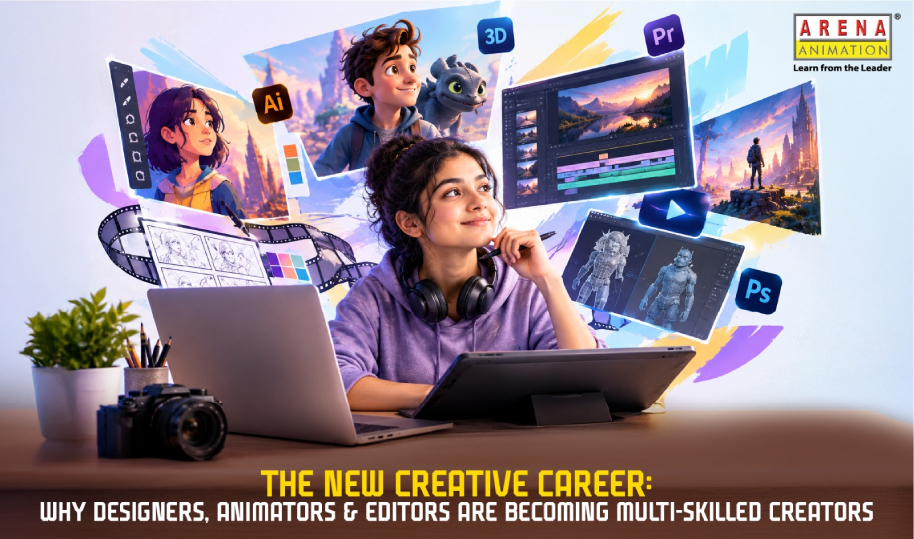
The New Creative Career: Why Designers, Animators & Editors Are Becoming Multi-Skilled Creators...
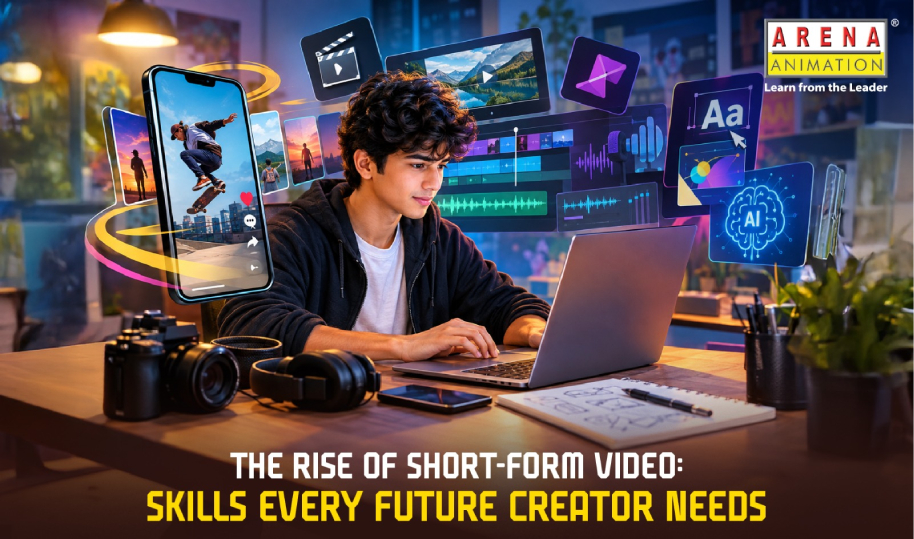
The Rise of Short-Form Video: Skills Every Future Creator Needs...
From Prompt to Production: How AI Is Changing the Creative Workflow...
Perspectives 2026: Exploring the Future of Creative Careers in Animation, VFX, Gaming & Digital Desi...
The Edupreneur’s Advantage: How Opening An Arena Animation Franchise Delivers High-Yield Business Gr...
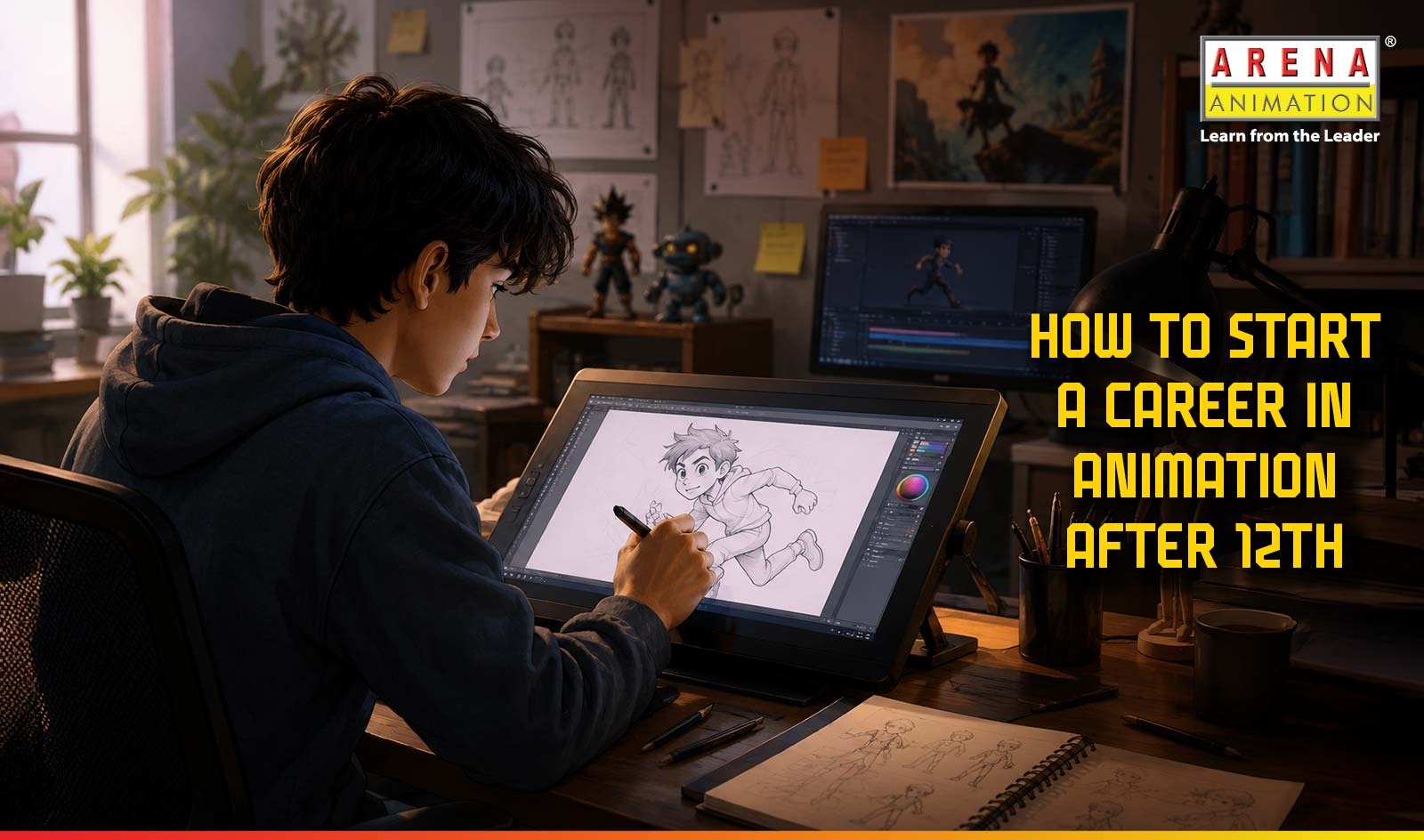
How to Start a Career in Animation After 12th
Right after Class 12, decisions about one’s career start feeling heavier than they should. Everyone seems to have a clear plan or at least something that sounds convincing. If animation keeps coming back to your mind during all this, it is worth taking seriously.
An animation career after 12th is not built in one step. It develops gradually, through practice, patience and a better understanding of how the work actually feels day to day.
What It Really Involves
At the beginning, animation often looks simple from the outside. That idea changes quickly once you start learning.
It is not just about drawing or using software. A lot of time goes into observing movement, adjusting timing and refining small details that most people would not notice. Progress can feel slow, especially in the early stages.
At the same time, there is a certain clarity that comes with practice. When something starts to move naturally on screen because of your effort, it feels earned. That is usually what keeps people going.
How to Start Career in Animation Without Confusion
When thinking about how to start a career in animation, it helps to begin with the basics instead of trying to learn everything at once.
You do not need to begin with advanced tools. In fact, starting there often leads to confusion. It is better to focus on the basics first. Understanding movement, spacing and timing builds a foundation that stays useful regardless of the software you use later.
Small exercises help more than they seem to. Simple movements, repeated practice and gradual improvement matter more than trying to create something complex too early.
It is also important to balance learning and doing. Watching tutorials can help but real understanding develops when you apply what you have learned and work through mistakes.
What to Pay Attention To
There are many animation courses after 12th, and they can appear quite similar at first.
The difference usually lies in how the course is structured. Some focus heavily on software from the beginning while others take time to build fundamentals before moving forward.
At Arena Animation, courses like Animation Prime and Animation Film Design follow a gradual approach. Students begin with design basics and animation principles, then move into tools and advanced techniques.
This approach may feel slow in the beginning but it helps students build a strong foundation in design, storytelling, animation principles and industry tools like Adobe Photoshop, After Effects and Autodesk Maya, making later stages and advanced projects easier to manage with confidence.
How Can an Animation Training Institute Help In Your Journey?
Learning independently is possible, but it often comes with uncertainty.
A structured animation training institute provides direction. Instead of guessing what to learn next, you follow a sequence that builds logically over time.
Feedback is another important factor. It is difficult to identify your own mistakes in the early stages. Having someone guide you through corrections can speed up improvement.
Institutes like Arena Animation also introduce students to project based learning which reflects how work is handled in real production environments.
Changes To Expect
Moving into 3d animation training is usually a turning point.
The process becomes more technical. You work with models, rigs and camera setups before even starting the animation. This can feel overwhelming at first, especially if you are still getting comfortable with the basics.
With time, the structure becomes clearer. Once you understand the workflow, it allows you to work on more detailed and realistic projects. This is also where many industry opportunities begin to open up.
What to Expect
Entering the industry can feel uncertain, especially when looking at animation jobs for beginners.
Most entry level roles focus on basic skills rather than perfection. Studios look for consistency in movement, clarity in timing and an understanding of fundamentals.
The first role may be as a trainee or junior artist. These positions are designed to help you adapt to real production environments, including deadlines and teamwork.
Growth from that point depends largely on continued practice and the ability to learn from each project. At the same time, studying at a good institute with placement support can help students secure their first break by guiding them in portfolio creation, interview preparation and presenting their skills professionally.
Building a Portfolio
A strong portfolio plays a central role in getting hired.
Certificates indicate that you have completed training but your work shows what you can actually do. Even simple projects can be valuable if they demonstrate clear understanding and improvement.
It helps to keep updating your portfolio. Replace older work with stronger pieces as your skills develop. A small, well presented portfolio is often more effective than a large one with inconsistent quality.
Final Thoughts
Building an animation career after 12th takes time. The process can feel repetitive at times and progress may not always be visible immediately.
What makes the difference is consistency. With regular practice, the concepts that seem difficult at first begin to feel more manageable.
Given the right training and steady effort, animation can develop into a stable and rewarding career path.
FAQs
1. How to start a career in animation after 12th?
Begin with basic concepts like movement and timing, then consider animation courses after 12th and gradually build a portfolio.
2. Are animation courses after 12th enough to get a job?
They provide essential skills but your portfolio and consistent practice are equally important.
3. What is included in 3D animation training?
3d animation training covers modelling, rigging, lighting, camera work and character animation using industry software.
4. Can beginners get animation jobs easily?
Animation jobs for beginners are available but selection depends on your understanding of basics and the quality of your portfolio.
5. Is an animation training institute necessary?
A structured animation training institute can provide guidance, feedback and industry relevant exposure.
STUDENT ENQUIRY
Join Arena Animation and turn your creative passion into a thriving career. Your story could be the next success we celebrate.

Did you find the information you were looking for?

At Arena Animation, we craft innovative digital solutions, empowering creativity and driving growth through cutting-edge animation and design expertise.