
The Rise of Short-Form Video: Skills Every Future Creator Needs...
From Prompt to Production: How AI Is Changing the Creative Workflow...
Perspectives 2026: Exploring the Future of Creative Careers in Animation, VFX, Gaming & Digital Desi...
The Edupreneur’s Advantage: How Opening An Arena Animation Franchise Delivers High-Yield Business Gr...
Real-Time Worlds: How An Unreal Engine Course Unlocks Careers In Gaming, Film Sets, And Virtual Real...
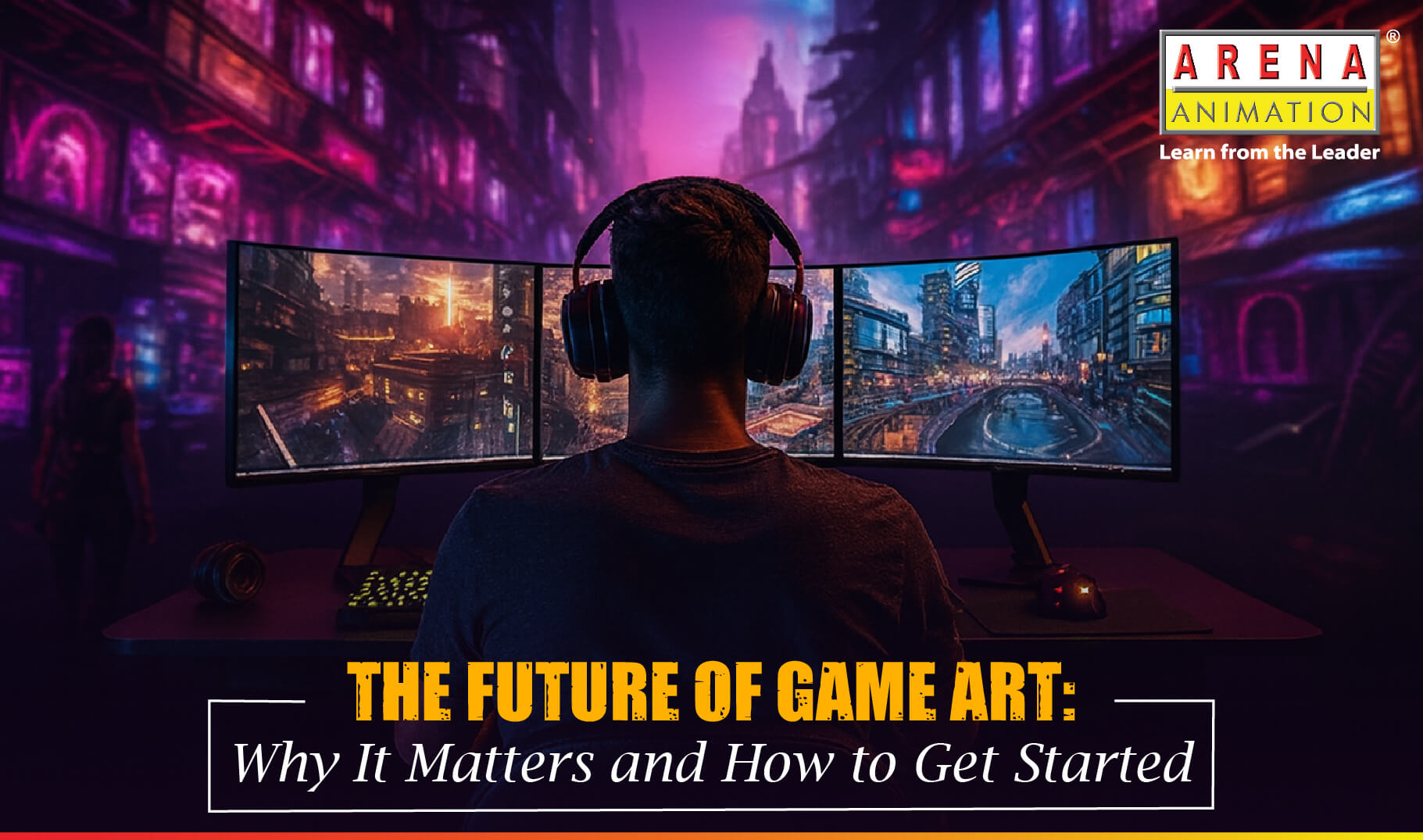
The Future of Game Art: Why It Matters and How to Get Started
Do you ever look at a video game and wonder how big the gaming industry might be? Well, it is a massive industry, bigger than movies, TV and music. It is an industry where creativity meets cool technology. And right at the heart of it is game art: the designs, characters, environments, and effects that make games so exciting to play.
If you’ve ever looked at a game and thought, “Wow, I want to create something like this!”, you’re already thinking like a game artist. But what does the future of game art look like? And how can you start your journey? Let’s find out.
Why Game Art Is More Important Than Ever
In today’s world, games are more than just games. They’re entire experiences. The graphics of a modern game can make you feel like you’re inside a movie, or even in another world. That’s thanks to advances in game technology and the incredible work of game artists.
And this is just the beginning. The future of game art is about making games even more immersive and interactive, with realistic characters, detailed environments, and even games that respond to your emotions.
As the demand for better graphics and more unique art styles grows, so will the need for skilled game artists.
2D or 3D? You’ll Need Both!
When it comes to 2D and 3D design, you don’t have to choose just one. Both are used in different types of games:
2D Design is great for mobile games, indie games, and stylised art. 3D modelling for game design is used in big AAA games, VR games, and realistic environments. Learning both gives you flexibility and makes you a better game artist.
AR vs VR — What’s the Difference?
With new trends in game technology, you’ll often hear about AR (Augmented Reality) and VR (Virtual Reality). They sound similar, but they’re different:
- AR (Augmented Reality) adds digital objects to the real world. Think of Pokémon GO, where Pokémon appear on your phone’s camera view.
- VR (Virtual Reality) puts you inside a digital world. You wear VR headsets and interact with the game environment in 360°.
Knowing the difference between augmented reality and virtual reality will help you design game art that fits the platform.
The Future of Game Art: What’s Coming Next?
Here’s what’s shaping the future of game art:
- Hyper-realistic visuals: Expect games to look more and more like real life, thanks to better lighting, textures, and effects.
- AI-powered tools: AI will help artists speed up the design process, making it easier to create detailed worlds.
- AR and VR growth: More games will use augmented reality and virtual reality, opening new ways to experience games.
- Interactive storytelling: Players will expect games where the story changes based on their choices, which means artists must think creatively about design.
If you’re someone who loves drawing, storytelling, or designing, this is a great time to enter the world of game art.
How to Become a Game Artist
Wondering how to become a game artist? It’s not as hard as you think. Here’s a simple roadmap:
- Learn the basics: Start with sketching, colour theory, and digital art.
- Master tools: Learn software like Photoshop, Illustrator, and Blender. For 3D modelling for game design, Blender and Maya are super popular.
- Build your portfolio: Create original game characters, environments, and assets to show off your skills.
- Stay updated: Keep an eye on trends in game technology and art styles.
- Join a course: A professional course can fast-track your learning. At Arena Animation, you’ll learn industry-relevant skills in 2D and 3D design, game art, and the latest tools used in the gaming industry, all while building a strong portfolio.
Ready to Start Your Game Art Journey?
The gaming world is booming, and the future of game art is brighter than ever. Whether you dream of designing stunning characters or building entire game worlds, there’s a place for you in this exciting industry.
And the best way to begin? Learn from the experts. At Arena Animation, you’ll get hands-on training in 2D and 3D design, 3D modelling for game design, and the latest game technology. You’ll also build a portfolio that helps you land exciting opportunities in gaming studios.
So why wait? Level up your skills with Arena Animation and turn your love for gaming into an amazing career.
FAQs
- I don’t know how to draw. Can I still learn game art?
Yes. Many students start without knowing how to draw. At Arena Animation, you’ll learn step-by-step, from basic sketching to using digital tools to create game art. - What kind of jobs can I get after learning game art?
You can work as a 2D/3D game artist, character designer, concept artist, texture artist, environment designer, and more in gaming studios or as a freelancer. - How can Arena Animation help me become a game artist?
Arena Animation offers courses that teach you 2D and 3D design, game art, and the latest game technology, even if you’re starting from zero. - What software do game artists use?
Game artists use tools like Photoshop, Illustrator, Blender, and Maya, all of which are taught from the basic level at Arena Animation for your easy understanding.
STUDENT ENQUIRY
Join Arena Animation and turn your creative passion into a thriving career. Your story could be the next success we celebrate.

Did you find the information you were looking for?

At Arena Animation, we craft innovative digital solutions, empowering creativity and driving growth through cutting-edge animation and design expertise.