
The New Creative Career: Why Designers, Animators & Editors Are Becoming Multi-Skilled Creators...
The Rise of Short-Form Video: Skills Every Future Creator Needs...
From Prompt to Production: How AI Is Changing the Creative Workflow...
Perspectives 2026: Exploring the Future of Creative Careers in Animation, VFX, Gaming & Digital Desi...
The Edupreneur’s Advantage: How Opening An Arena Animation Franchise Delivers High-Yield Business Gr...
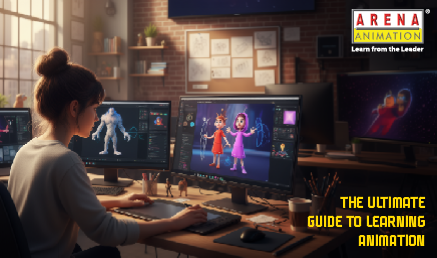
The Ultimate Guide to Learning Animation
Animation has established itself as a significant part of the modern creative industry, playing a key role across films, gaming, advertising and emerging platforms. With its growing presence and demand, animation is increasingly being considered as a structured and long term career option by students after completing school. For students exploring animation courses after 12th, it is important to understand what animation training involves, how different animation programs are structured and how these choices influence future career opportunities. This blog offers an overview of learning animation, the various course pathways available and the role of structured education in building a professional animation career.
What Learning Animation Really Feels Like
Learning animation is not glamorous on day one. It is slow, hands-on and sometimes confusing. But it is also deeply creative.
Good animation training teaches you how to observe the world differently. You begin noticing how people walk, pause, react and express emotions without speaking. Animation is not just about software. It is about understanding movement, timing and storytelling and then translating that understanding into visuals.
Most animation courses focus on:
● Drawing and visual fundamentals
● Timing, spacing and rhythm
● Storytelling and character acting
● Technical skills using industry software
Understanding the Different Types of Animation Courses
There is no single animation program that suits everyone. Your background, pace and long-term goals matter.
2D and 3D Animation Courses
2D and 3D animation courses lead to very different creative paths. 2D animation focuses on illustration, expressive movement and frame-by-frame storytelling. 3D animation involves working with models, textures, lighting, cameras and realistic motion inside a digital environment.
Many animation and multimedia courses allow students to explore both areas before choosing a specialization. This flexibility helps students discover what truly excites them.
Short-Term Animation Courses
A short term animation course is often where curiosity turns into clarity. Arena Animation offers numerous short-term animation courses that focus on specific skills rather than trying to give everything in one go. These usually last for a few months and are designed in such a way so as to help students build practical abilities as fast as possible. The short-term options include learning areas like 2D animation basics, 3D animation fundamentals, motion graphics, visual effects tools, compositing and editing, among others, design-related skills. Such courses turn out to be your best deal if you intend to peek at what animation is, not taking it long or in case you want to build some skills parallel with college.
Long-Term Animation Programs
If you are aiming for a long-term animation career, deeper training becomes important. This is where structured animation programs make a difference. Arena Animation offers career-focused programs such as Animation Prime, which is designed to take students from fundamentals to professional-level animation skills. It covers animation principles, 2D and 3D workflows, character animation, lighting and storytelling.
For students interested in visual effects, programs like VFX Prime and VFX Film Making focus on how effects are planned, created and integrated into films and digital media. These programs introduce industry workflows and help students understand how real production pipelines work. There are also specialised programs like 3D Digital Game Art & Design for students drawn towards gaming and interactive media. These long-term animation programs usually span several months to over a year, giving students time to practice, improve and build confidence.
Animation Courses After 12th
Animation courses after 12th are open to students from all streams. Science, commerce or arts does not matter as much as interest and consistency. Many students discover their creative potential only after joining animation training. A supportive learning environment and structured guidance help students grow without pressure.
Animation Course Duration Explained Simply
Animation course duration varies based on the depth and scope of learning. Short-term animation courses are designed to introduce specific skills and tools, helping students build a foundation or explore a particular area of interest. These courses are ideal for gaining clarity, strengthening basics or adding focused skills to an existing academic journey. Long-term animation programs offer a more structured and immersive learning experience. They allow students to develop strong fundamentals, practise extensively and understand professional workflows used in the industry. Such programs are especially valuable for those aiming to build a sustained career in animation, visual effects or game design. Instead of focusing on duration alone, students should evaluate how a program supports skill development, creative growth and long-term career readiness.
What an Animation Career Looks Like Today
An animation career is not limited to films.
Animators work across advertising, gaming, OTT platforms, education and branding. Studios look for strong fundamentals, understanding of movement and a willingness to learn.
In animation, progress and practice matter more than certificates.
Choosing Where to Learn Animation
Many students search for the top animation institute in India but learning brands and training ecosystems matter just as much. Arena Animation is known for structured animation training, industry-aligned curriculum and creative mentorship.
Focus on guidance, practice opportunities and exposure to professional workflows rather than names alone.
Final Thoughts and Your Next Step
Animation is built on consistency, curiosity and practice. It is a field where growth happens over time, through learning, observation and hands-on work. For students stepping out of school, this phase is about exploration, building confidence and understanding where your interests truly lie.
The right animation courses help you develop technical and creative skills. The right mindset helps you turn those skills into a profession.
If animation genuinely excites you, begin by exploring animation programs that align with your interests and learning pace. Visit training centres, speak with counsellors and take the time to understand course structures and career pathways.
Your animation career begins when you choose to learn seriously. Take that first step today. Explore a trusted animation training program and start turning your imagination into a profession.
FAQs
1. Can I do animation after 12th without science?
Yes. Students from science, commerce and arts can study animation. Interest and practice matter more than your school stream.
2. How long does it take to learn animation properly?
Short term courses take a few months and help with basics. Long term programs take longer and build professional level skills.
3. Is animation a good career option in India?
Yes. Animation careers exist in films, gaming, OTT platforms and advertising.
4. What skills do I need to become an animator?
Observation, creativity and patience are important. Technical skills develop through training and regular practice.
STUDENT ENQUIRY
Join Arena Animation and turn your creative passion into a thriving career. Your story could be the next success we celebrate.

Did you find the information you were looking for?

At Arena Animation, we craft innovative digital solutions, empowering creativity and driving growth through cutting-edge animation and design expertise.