
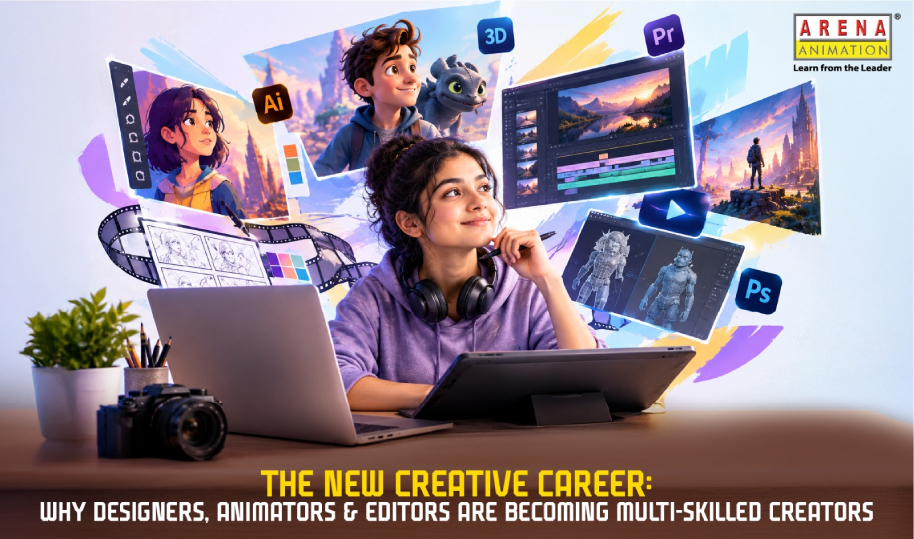
The New Creative Career: Why Designers, Animators & Editors Are Becoming Multi-Skilled Creators...
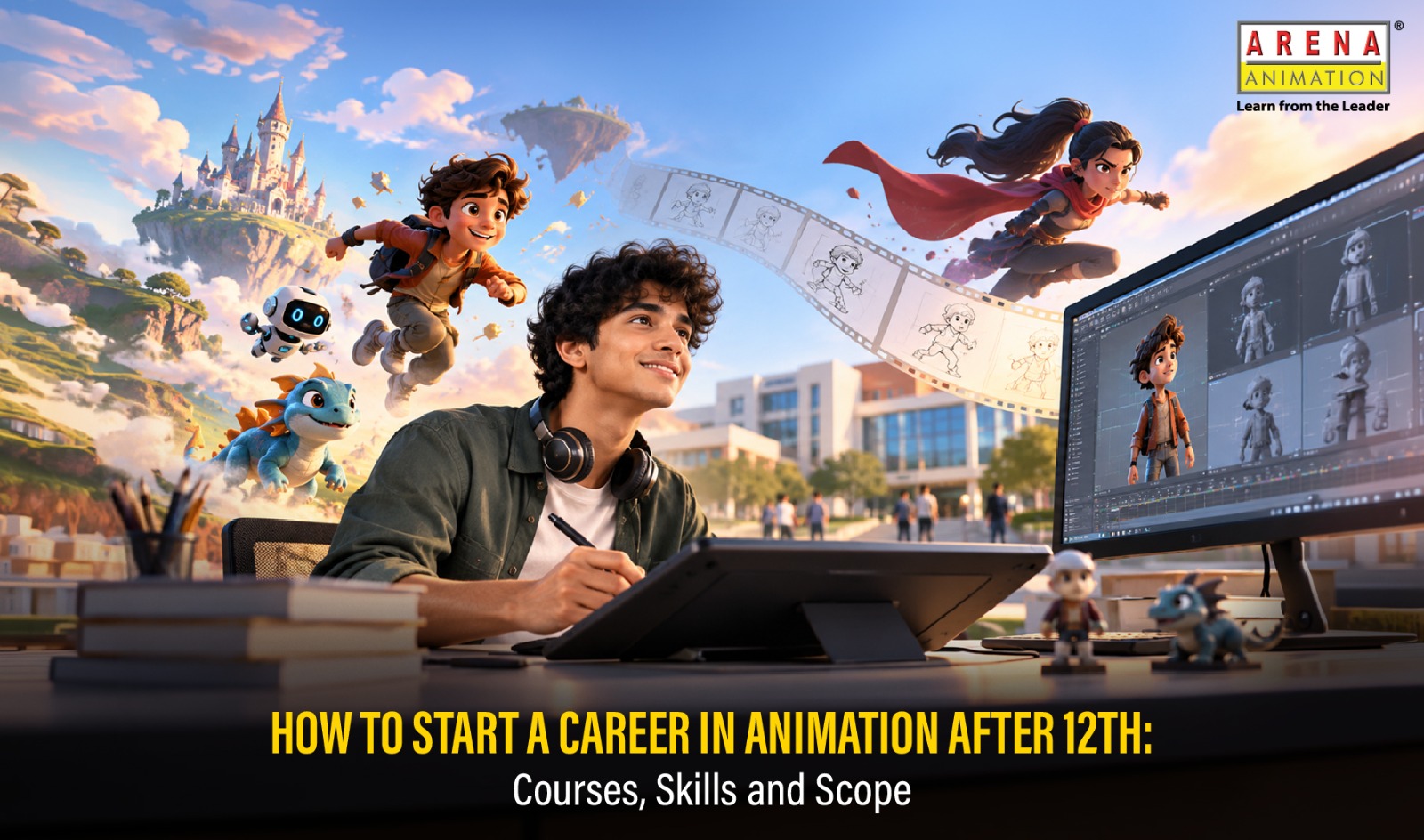
How to Start a Career in Animation After 12th: Courses, Skills and Scope...
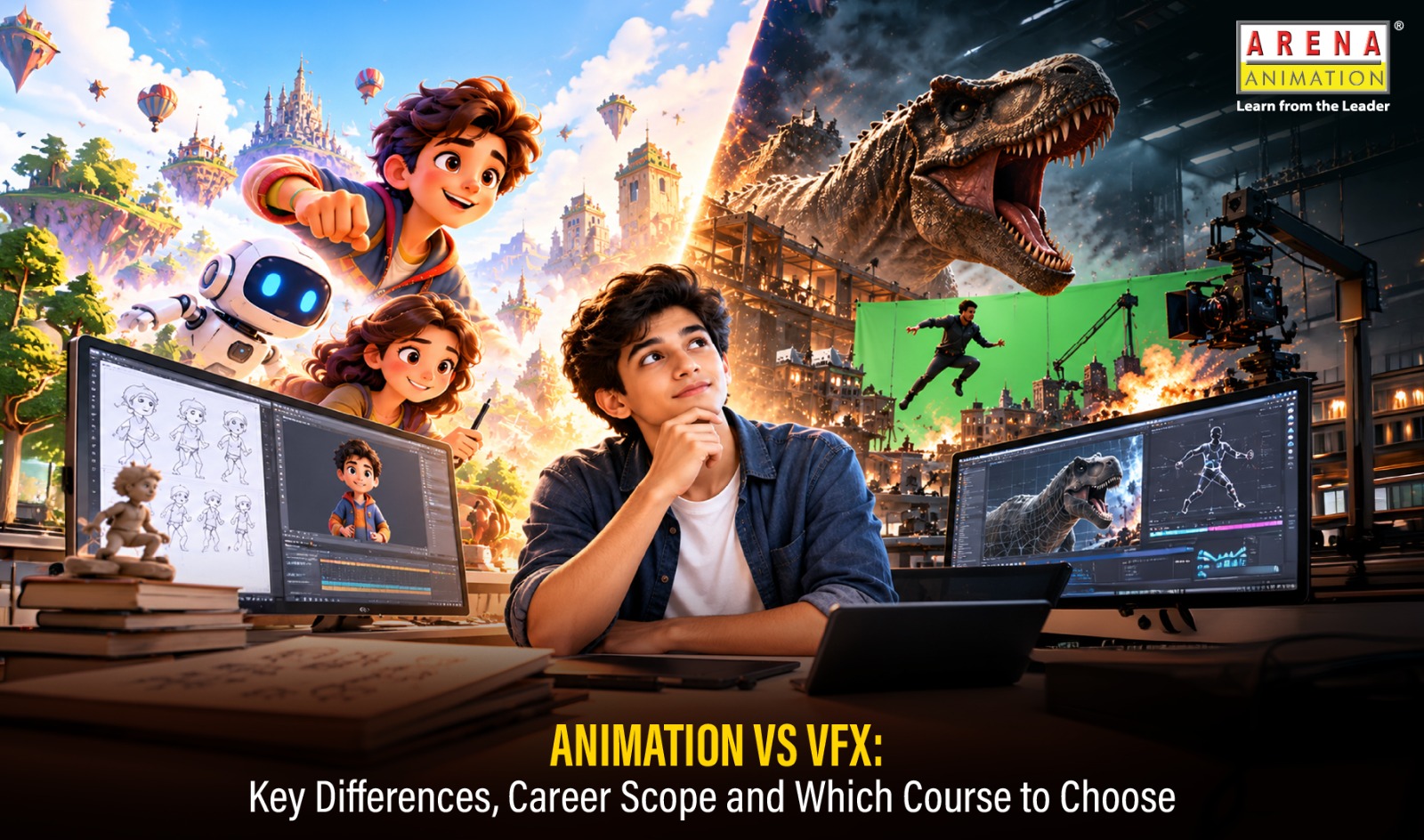
Animation vs VFX: Key Differences, Career Scope and Which Course to Choose...
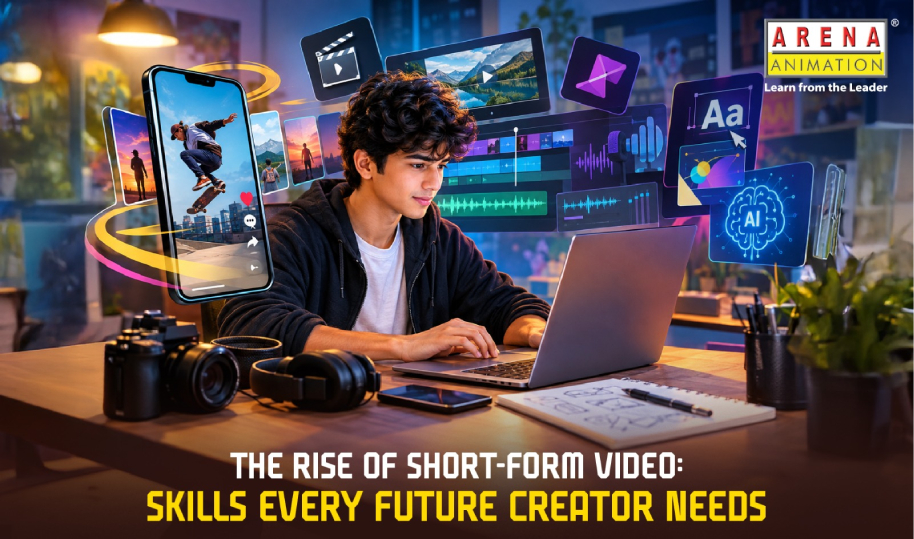
The Rise of Short-Form Video: Skills Every Future Creator Needs...
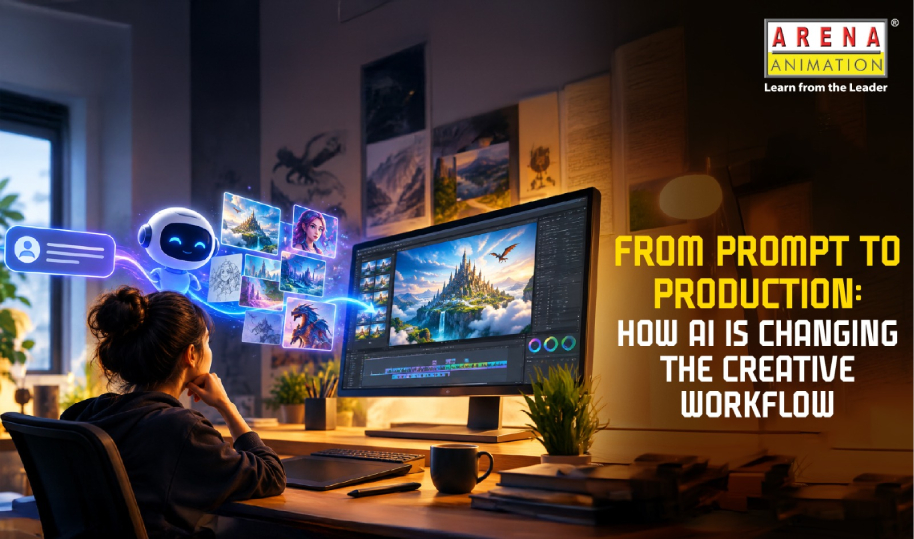
From Prompt to Production: How AI Is Changing the Creative Workflow...
How to Start a Career in Animation After 12th: Courses, Skills and Scope
Love seeing how animated characters come alive on screen? Or perhaps you enjoy sketching, creating digital art or imagining worlds of your own. If you are wondering what to do after Class 12, animation could be a way to turn those interests into creative work across films, gaming, advertising and OTT content.
But where do you begin? Before picking a course, it helps to discover what animators actually do, which skills you will need and which part of the creative process excites you most. Here's a guide to help you explore your options and take your first steps.
TL;DR
That character you love, the game world you keep returning to, the animated sequence you can't stop watching, what if you could help create something like it? After Class 12, you can begin exploring 2D animation, 3D animation and VFX through hands-on learning. The key is to find the area that excites you, build your skills and create a portfolio that shows what you can do. Let's find out where your animation journey could begin.
Table of Contents
- Why animation is a career option after 12th
- Understanding animation courses after 12th
- Building the right animation skills
- Exploring 2D and 3D animation
- Career scope in animation
- Choosing the right course
- Building a portfolio
- Conclusion
- FAQs
Why Choose Animation After 12th
Think about the last animated film, game or advertisement that caught your attention. Was it the characters, the way they moved or the world around them? Animation brings all these details together through art, storytelling and technology. And if creating something like that sounds exciting, there's plenty for you to explore.
You don't have to limit yourself to traditional cartoons, either. You could explore 2D or 3D animation, character design, VFX, motion graphics or real-time production. Each area offers a different way to bring an idea to life, so you can start with what interests you most.
Starting after Class 12 gives you time to learn the fundamentals, try different techniques and discover your strengths. Through structured training and practical projects, you can gradually turn your ideas into portfolio-worthy work.
Understanding Animation Courses After 12th
Not sure which animation course is right for you? Start by asking yourself what you would love to create. If you enjoy drawing characters and bringing expressions to life, a focused 2D course may appeal to you. If you want to build detailed characters, environments and visual effects, you might prefer a broader programme. Exploring the course content will help you see which path fits your interests.
Arena Animation's Advanced Program in Animation and VFX covers visual storytelling, character design, 3D modelling, texturing, rigging, animation, simulations and compositing. The programme also introduces tools such as Autodesk Maya, Houdini, Nuke and Adobe After Effects.
If you would like to focus on 2D, Arena's Master in 2D Animation covers animation fundamentals, character design, storyboarding, digital design, advanced 2D animation, editing and sound. You can also compare a diploma in animation with other programmes by looking at their course content, practical training and opportunities to develop a portfolio.
Building the Right Animation Skills
Knowing your way around software is useful, but great animation starts with understanding how things move and how stories are told. As you learn, pay attention to timing, composition, colour, lighting and the small details that make a character or scene feel believable.
The more you practice, the more you will develop your own creative judgement alongside technical skills. That balance can help you work with new tools and adapt to changing production workflows.
Exploring 2D and 3D Animation
Do you enjoy sketching expressive characters and imagining their movements? You might find your creative space in 2D animation. If building characters and worlds with depth excites you, 3D animation may be worth exploring. While 2D focuses on digitally created movement and illustration-led storytelling, 3D involves modelling, texturing, rigging, lighting and animating objects in three-dimensional environments.
If you lean towards 2D animation courses, you can begin with character design, storyboarding, animation principles and digital tools. If 3D interests you more, you can explore modelling, texturing, rigging and lighting before taking on advanced animation projects.
Curious about the technology behind virtual worlds? You could also explore real-time production, where animation meets motion capture, simulations, virtual environments and cinematic storytelling.
Career Scope in Animation
Imagine seeing a character you have animated appear in a film, a world you have helped build become part of a game or your motion graphics bring a brand's story to life. That's the exciting part of exploring animation: your creativity can contribute to many kinds of experiences, from films and television to gaming, advertising, digital content and immersive media.
As you discover your strengths, you may find yourself drawn to bringing characters to life as a 2D or 3D animator, shaping stories as a storyboard artist, designing characters and environments, or creating motion graphics. You don't need to decide on a job title today. Start by finding the kind of work you genuinely enjoy making.
Choosing the Right Course
There's no single route you have to follow. The right programme depends on the kind of creative work you want to explore.
If you love character movement and visual storytelling, a specialised animation programme may be a good fit. If you're curious about several parts of the production process, you could explore a programme that combines animation and VFX.
Before choosing among animation courses after 12th, look closely at the curriculum, hands-on projects, software exposure, portfolio development and opportunities for industry interaction. If you're considering a diploma in animation, compare its focus and practical learning opportunities with other available pathways.
Building a Portfolio
Your portfolio is where your ideas start speaking for themselves. You might create a short 2D animated scene, design an original character or storyboard a sequence. If you are exploring 3D animation, you could model, texture and rig a character, then animate it in a short scene.
You don't need to make everything perfect on your first attempt. Keep experimenting and improving your projects as you learn. Over time, your portfolio can show not just what tools you've used, but how you think, solve creative problems and bring ideas to life.
Conclusion
Every animated story you admire began with someone asking, 'What if?' Your journey can begin with a similar question: what would you love to create? A memorable character, a world for a game or a scene that makes people feel something? Once you start exploring 2D and 3D animation, VFX and other creative areas, you'll get a clearer sense of where your interests fit.
Animation courses after 12th can help you turn that curiosity into practical skills. Whether you choose focused 2D animation courses, a diploma in animation or a broader programme, look for opportunities to learn by creating and to build work you can be proud of.
You don't need every answer right now. Start with an idea, learn how to bring it to life and keep creating. Your first animation project could be the beginning of a much bigger story.
FAQs
- What should I study after 12th to start a career in animation?
Ans - You can start with a programme that introduces animation fundamentals and then explore the area you enjoy most such as 2D animation, 3D animation, VFX or real-time animation. Look for a course that combines creative foundations with practical software training and projects you can add to your portfolio.
- Which animation courses after 12th are available at Arena Animation?
Ans - You can explore Arena Animation's Advanced Program in Animation and VFX, Master in 2D Animation and Advanced Program in Animation with Unreal Engine. Compare what each programme teaches and the projects you'll work on to find a path that fits your interests.
- Is a diploma in animation enough to build a career?
Ans - A diploma in animation can be a useful starting point, but your growth also depends on what you practice and create. As you compare programmes, look for hands-on projects, relevant software training and opportunities to build a strong portfolio.
- Are 2D animation courses suitable for beginners?
Ans - Yes. You can begin with animation principles, character design, storyboarding and digital tools, even if you're new to the field. These fundamentals can prepare you for more advanced 2D animation projects as your confidence grows.
- What career opportunities are available after studying animation?
Ans - You could explore roles such as 2D or 3D animator, storyboard artist, character designer, 3D modeller, environment artist or motion graphics designer. The work can span films, games, advertising, television and digital content. Your interests, specialisation and portfolio will help shape the direction you take.
STUDENT ENQUIRY
Join Arena Animation and turn your creative passion into a thriving career. Your story could be the next success we celebrate.

Did you find the information you were looking for?
At Arena Animation, we craft innovative digital solutions, empowering creativity and driving growth through cutting-edge animation and design expertise.