
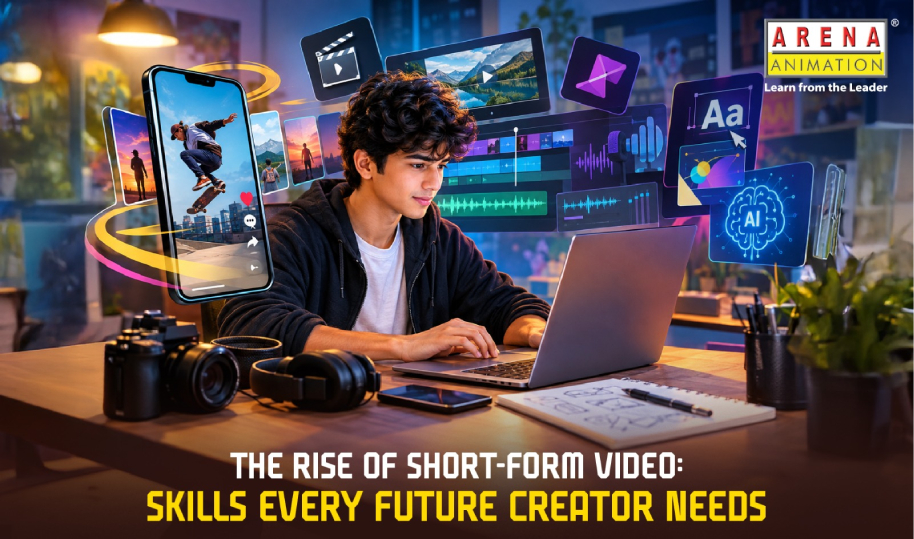
The Rise of Short-Form Video: Skills Every Future Creator Needs...
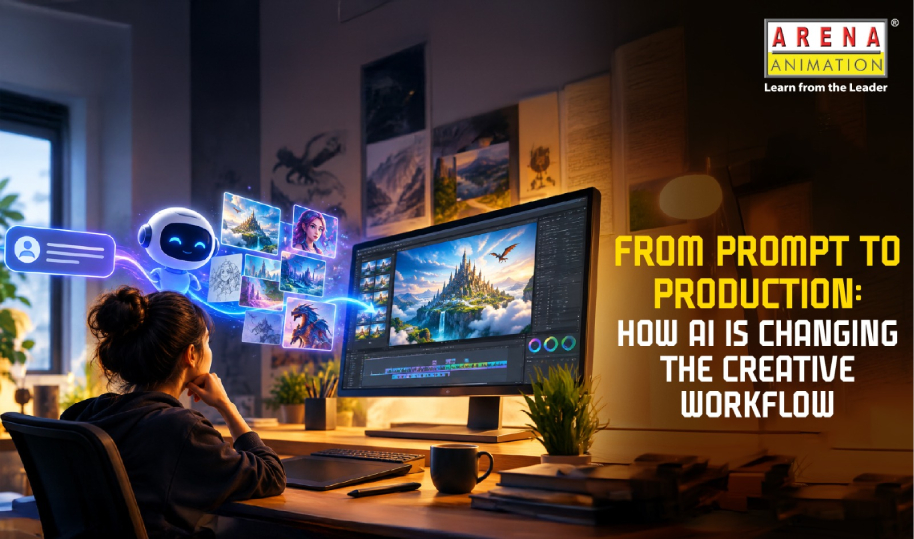
From Prompt to Production: How AI Is Changing the Creative Workflow...
Perspectives 2026: Exploring the Future of Creative Careers in Animation, VFX, Gaming & Digital Desi...
The Edupreneur’s Advantage: How Opening An Arena Animation Franchise Delivers High-Yield Business Gr...
Real-Time Worlds: How An Unreal Engine Course Unlocks Careers In Gaming, Film Sets, And Virtual Real...

3D Animation vs VFX vs CGI: Understanding the Key Differences
In the diversified world of digital storytelling, terms like '3D animation', 'VFX' and 'CGI' often create more confusion than clarity. So, let’s dive deep into this subject to understand what they really mean and what the key differences are.
What is 3D Animation?
3D animation is the digital art that brings objects to life. All of us have enjoyed these sorts of movies, the recent one being Mahavatar Narasimha, where the entire movie is in 3D animation. These are not the flat characters like the traditional animated cartoons we see on TV; they are 2D animation.
3D animated characters have more depth, realism and noticeable presence. It creates immersive worlds that feel alive.
What is VFX?
VFX, short for visual effects, blends real-world footage with computer-generated images or videos. Think of superheroes, the flying, the explosions, and fantasy creatures. They are integrated into the scene so seamlessly that it looks real. That’s VFX.
The magic lies in doing it with such perfection that the audience doesn’t realise the difference between digital and real. From creating battle scenes to transforming boring cityscapes into alien worlds, VFX elevates the cinematic experience.
What is CGI?
Computer-generated imagery, aka CGI, covers both 3D animation and VFX. CGI refers to any content created using computers, be it as simple as a 3D logo or a complex virtual world.
CGI includes still renders, environmental simulations and digital effects. 3D animation is a part of CGI, while VFX uses CGI elements to create desired effects.
In a nutshell:
3D Animation: Adds motion to characters, objects and an environment that is not flat. Its main focus is to tell stories through these motions in films, games, VR, etc. The skillset that you learn is modelling, rigging and animation.
For example: A flying dragon is a perfect example of 3D animation.
VFX: Enhances original locations with digital elements. Its main focus is to blend the real and digital worlds seamlessly in movies, TV, commercials, etc. The skillset that you learn is compositing, teaching and stimulation.
Continuing the example, imagine the dragon flying over Delhi; this would make a perfect example of VFX where the real-life city is combined with a dragon.
CGI: This imagery is completely computer-generated, including 3D animation and VFX. Its main focus is to create visual, still or digital motion. The skillset that you learn is wide in range, like modelling, animation, effects, rendering, etc.
Here an ideal example would be a dragon flying over a fantasy city.
Why does understanding the differences matter?
Getting a better understanding of 3D animation vs VFX vs CGI will help aspiring creators to realise where their passion lies and which skills they want to learn. This clarity helps you in choosing the right career path, honing relevant skills and building a portfolio that stands out.
If you are passionate about visual storytelling and want to master the art, then Arena Animation is the place. Our industry-aligned courses, expert mentors and hands-on projects equip you to step confidently into the world of digital creativity and build your own dragon.
Join Arena Animation and transform your imagination into breathtaking visuals that captivate the world. Create a dragon that nobody has seen before. Enrol today!
STUDENT ENQUIRY
Join Arena Animation and turn your creative passion into a thriving career. Your story could be the next success we celebrate.

Did you find the information you were looking for?

At Arena Animation, we craft innovative digital solutions, empowering creativity and driving growth through cutting-edge animation and design expertise.